St Peter's Basilica Vatican City Travel Guide
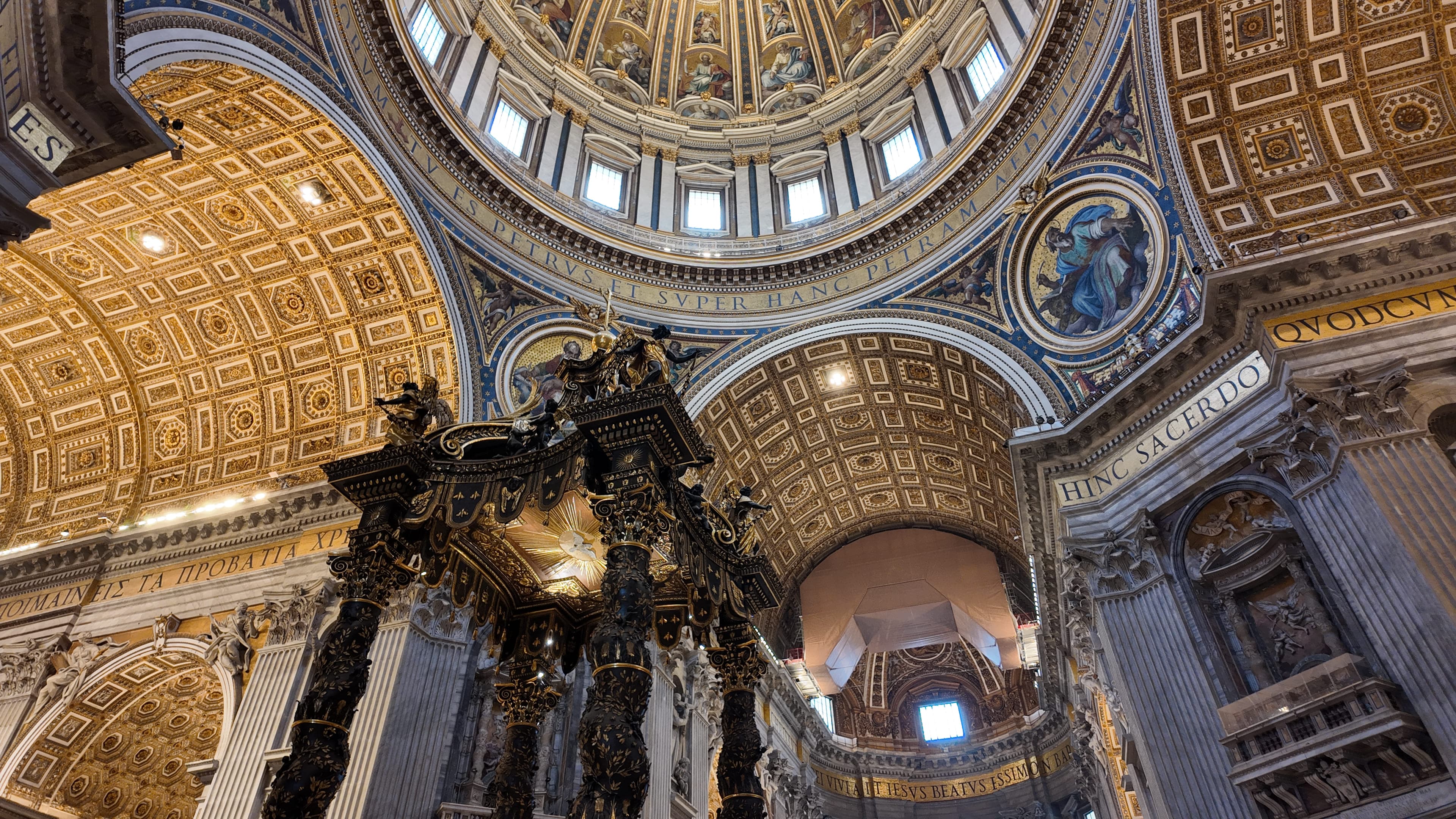
We had seen a thousand photos of St Peter's Basilica and still gasped when we stepped inside, because no lens conveys the scale of that nave. Vatican City packs the world's largest church, the Sistine Chapel, and Bernini's great square into the world's smallest country, all of it doable in one unforgettable day from Rome. This guide covers exactly how we did it: which tickets to book, when to arrive, what the dome climb involves, and what it all costs.
Quick Facts
Country
Vatican City
Region
Enclave within Rome, Italy
Language
Italian and Latin (English widely understood)
Currency
Euro (EUR)
Best Time to Visit
November-March for short lines; April-October go at 7 am
Visa (MY/PH)
Schengen rules apply ~ check current requirements
Getting Around
Walking; metro line A to Ottaviano (€1.50 Rome ticket)
Daily Budget
Budget
$70-110
Mid
$150-230
Luxury
$350+
Top things to do in Vatican City
St Peter's Basilica is free to enter, which still amazes us given what waits inside: Michelangelo's Pieta behind glass just right of the entrance, Bernini's bronze baldachin over the papal altar, and a nave that could swallow most cathedrals whole. The catch is the security line, which can stretch past an hour by mid-morning. We went at the 7 am opening and walked straight in, sharing the church with early mass-goers and almost no tourists.
The dome climb costs €10-15 and is the best thing we did in Rome, full stop. You can take an elevator partway, but the final stretch is 551 steps through narrow, sloping passages squeezed between the dome's inner and outer shells. The reward is a balcony view straight down Bernini's colonnade and across every dome and rooftop in Rome. Skip it only if you struggle with stairs or tight spaces.
The Vatican Museums and Sistine Chapel are the other half of the day, priced at €20-25 plus a €5 online booking fee. That €5 is the best money you will spend in Rome, because walk-up queues routinely run two hours or more. Entry is free on the last Sunday of each month, but the crowds that day are brutal, so we would pay for a normal weekday slot every time.
The art and history inside St Peter's
The basilica you see today rose between 1506 and 1626 over what tradition holds is the tomb of St Peter himself, replacing a 4th-century church built by Constantine. Nearly every giant of the Renaissance and Baroque touched it: Bramante drew the first plans, Michelangelo designed the dome at age 71, and Bernini spent decades on the square, the baldachin, and the glowing alabaster window of the apse.
Give yourself at least 90 minutes inside and look for the details that most visitors stride past: the porphyry disc in the floor where Charlemagne was crowned in 800, the brass line markers showing how smaller cathedrals would fit inside the nave, and the 96 lamps burning around the sunken confessio above St Peter's tomb. The Vatican grottoes below, holding papal tombs, are free and exit conveniently near the dome entrance.
In the Sistine Chapel, resist the urge to rush to Michelangelo's ceiling and Last Judgment straight away; the side walls hold frescoes by Botticelli and Perugino that would headline any other museum on Earth. Photography is banned in the chapel and guards do enforce silence. A little-known trick: some guided tours exit the chapel directly into St Peter's, skipping the basilica security line entirely.
St Peter's Square and the Vatican beyond the church
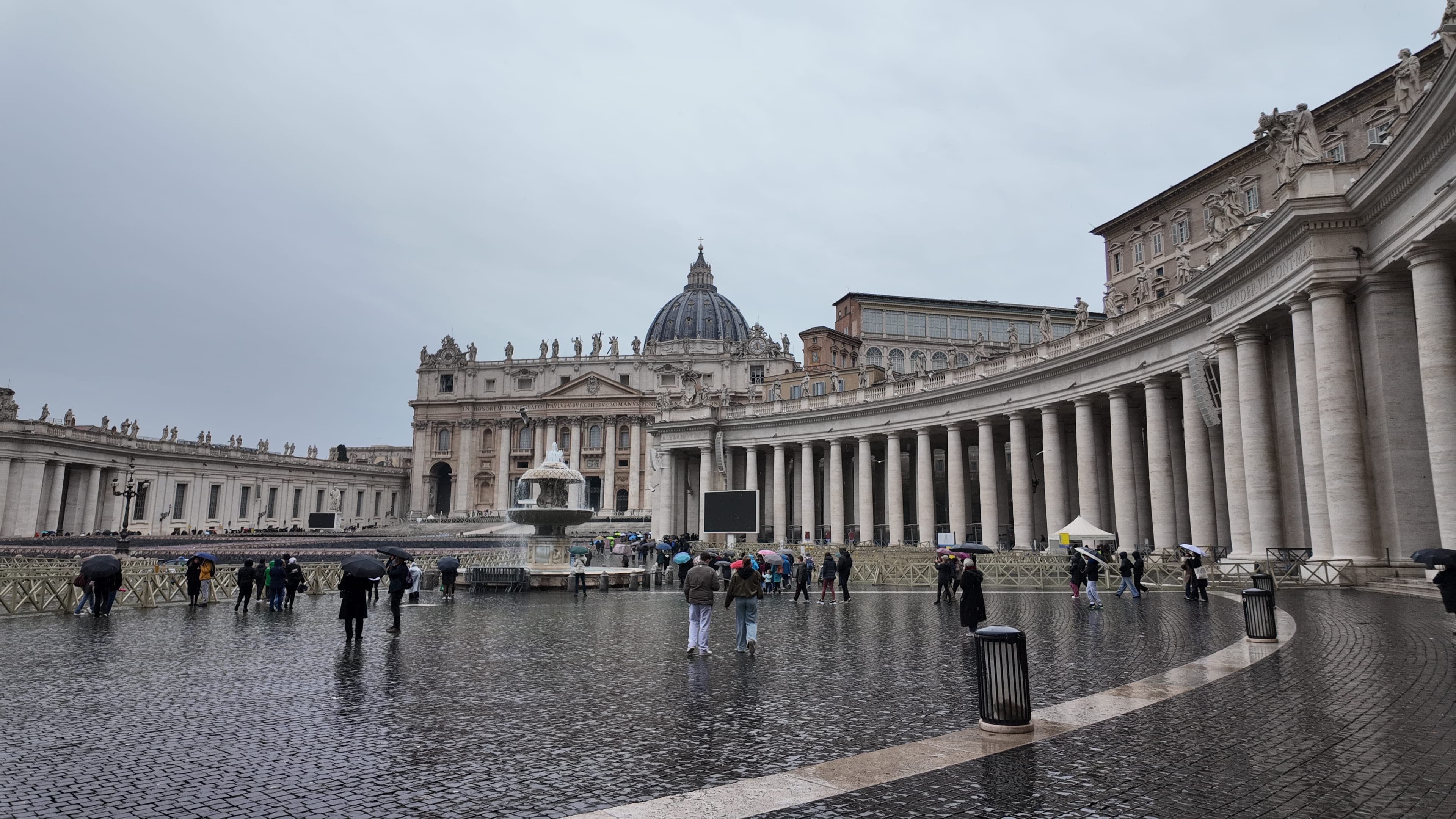
St Peter's Square is Bernini's masterpiece of crowd choreography, embraced by two colonnades of 284 columns topped with 140 saints. Find the two porphyry discs set in the pavement between the fountains and the obelisk: stand on one and each four-deep colonnade lines up into a single row of columns. The Egyptian obelisk at the center is 25 meters of granite that watched the crucifixion-era circus of Nero.
If your visit falls on a Wednesday, the Pope typically holds a general audience in the square or the audience hall from 9:30 am; tickets are free but must be reserved ahead, and the square is closed to casual sightseeing until it ends around noon. On Sundays at noon the Angelus blessing takes just 15 minutes and needs no ticket. Plan basilica visits around these events or embrace them as part of the experience.
Beyond the square, the Vatican Gardens cover more than half the country's territory and can only be seen on a pre-booked guided tour. Serious walkers should also climb to the Castel Sant'Angelo ramparts, ten minutes away along Via della Conciliazione, for the classic postcard angle of the basilica. The Vatican post office beside the square sells stamps from the world's smallest state, our favorite cheap souvenir at about €1.30 a postcard stamp.
Getting there and where to stay nearby
Vatican City sits on Rome's west bank and needs no border formalities; you simply walk in through the square. From the historic center it is a lovely 25-35 minute walk across Ponte Sant'Angelo, or take metro line A to Ottaviano station, a 10-minute walk from the square, on a standard €1.50 Rome transit ticket valid 100 minutes. Buses 40 and 64 from Termini also stop nearby, but both are notorious pickpocket routes, so keep bags zipped.
The Prati district, immediately north of the Vatican, is a genuinely pleasant place to stay: orderly 19th-century streets, excellent food shopping around Mercato Trionfale, and mid-range doubles at €100-180 per night, noticeably cheaper than the centro storico. Staying here puts you five minutes from the museum entrance for that crucial early start. Alternatively, base yourself near the Pantheon at €130-220 and treat the Vatican as a one-day expedition, which is what we did.
Best time to visit and the dress code
Tuesday, Thursday, and Friday mornings are the quietest windows; Wednesdays are disrupted by the papal audience, Saturdays are packed, and the basilica closes to tourists during Sunday morning services. Seasonally, late autumn through winter (excluding Christmas week and Easter) brings the shortest lines we have ever seen there, while April to October demands the 7 am start. The basilica generally opens 7 am to 7 pm in summer and until 6 pm in winter.
The dress code is enforced by inspectors at the door, not merely suggested: shoulders and knees must be covered for everyone, men included, and hats come off inside. We watched visitors in shorts get turned away after queueing an hour, so carry a light scarf or wear convertible trousers in summer. Large bags must be checked, and airport-style security means no knives or tripods. Water fountains in the square let you refill bottles for free.
How much does a Vatican day cost?
The core costs are simple: St Peter's Basilica is free, the dome climb is €10-15, and the Vatican Museums with the Sistine Chapel run €20-25 plus the €5 booking fee. That means the complete Vatican experience costs roughly €35-45 (about $38-49) per person, cheaper than a single theme-park ticket for what is arguably the greatest art collection on the planet. Audio guides add €7-8 and are worth it in the museums.
For the full day from Rome, budget $70-110 per person including transit, tickets, lunch, and a gelato-fueled recovery stop. Eat in Prati rather than on Via della Conciliazione, where tourist-trap pizza runs €15-18; two blocks north, a superb pizza al taglio lunch costs €5-8 and a trattoria plate of pasta €10-14. Guided small-group tours combining the museums and basilica cost €55-90 per person and are the one splurge we would consider for first-timers short on time.
See it on the Map
View St. Peter's Basilica alongside all my other footprints.
More from Europe
Budgeting for Vatican City
Wondering how much Vatican City costs? See our real budget breakdown with daily costs at budget, mid-range, and luxury levels.