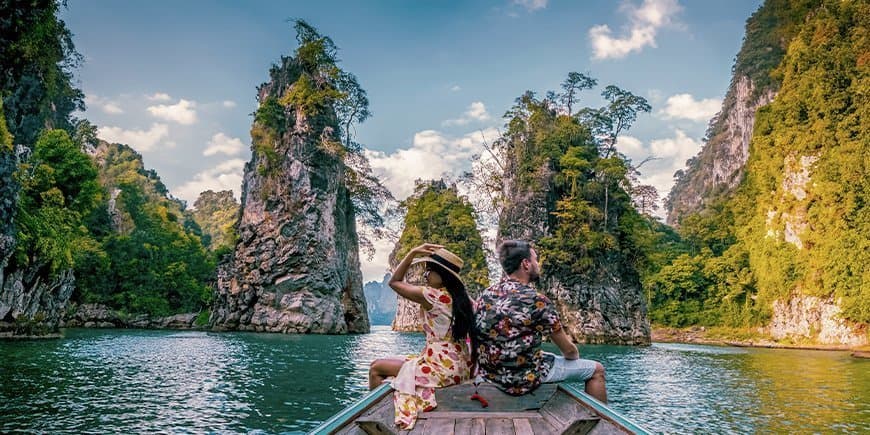
Bangkok Thailand Travel Guide
Bangkok grabbed us on day one and never let go. Thailand's capital packs gilded palaces, river ferries that cost pennies, and the best street food scene on the planet into one gloriously chaotic city. The famous temple circuit is astonishing value too, the three biggest sights together cost about the price of a single Singapore ticket. Here's exactly how we'd plan it, with real prices for every stop.
Quick Facts
Country
Thailand
Region
Southeast Asia
Language
Thai (English common in tourist areas)
Currency
Thai baht (THB), 1 USD is about 36 baht
Best Time to Visit
November to February (cool, dry season)
Visa (MY/PH)
Visa-free for many nationalities ~ check current rules
Getting Around
BTS/MRT trains 17-62 baht, river boats from 16 baht, Grab
Daily Budget
Budget
$25-40
Mid
$60-110
Luxury
$200+
Top things to do in Bangkok: the temple circuit
Start at the Grand Palace and Wat Phra Kaew, home of the Emerald Buddha. At 500 baht, about $14, it's Bangkok's most expensive ticket and still unmissable. Arrive at the 8:30 am opening to walk the gilded courtyards before the tour buses, and ignore anyone outside telling you it's closed for a holiday, that's the city's oldest scam and it isn't. Dress codes are enforced everywhere on this circuit: shoulders and knees covered, no exceptions.
A ten-minute walk south, Wat Pho holds the jaw-dropping 46-metre golden Reclining Buddha. Entry is 300 baht, about $8, and includes a bottle of water. This is also the birthplace of Thai massage, and the on-site school offers the most credentialed massage in Thailand from 320 baht, exactly what your temple-walking feet need. Then take the 5 baht ferry across the river to Wat Arun, the Temple of Dawn, where 200 baht, about $6, lets you climb the steep porcelain-studded spire.
Round out the classics with the Jim Thompson House, the teakwood home of the American who revived the Thai silk industry and then vanished mysteriously in 1967. Entry is 200 baht including a guided tour. And if you're in town on a weekend, Chatuchak Weekend Market is free to enter and utterly enormous, more than 15,000 stalls, so screenshot the section numbers, go before 11 am, and budget for the coconut ice cream.
Street food in Bangkok: what to eat and what it costs
Street food is the city's beating heart, and it's absurdly cheap. A plate of pad thai from a wok cart runs 50-80 baht, a bowl of boat noodles in the old quarter can be as little as 20-30 baht per serving, and mango sticky rice from a fruit cart costs 60-100 baht. We rarely spent more than 200-300 baht, about $6-8, on a full day of grazing. Follow the queues of office workers at lunchtime, they know exactly which carts are best.
For a concentrated hit, head to Chinatown on Yaowarat Road after dark, when the neon signs flare up and the street becomes one long open-air kitchen: grilled river prawns, oyster omelettes, bird's nest soup, and kuay jab pepper broth. Sit-down meals at simple Thai restaurants still only run 80-200 baht a dish. One habit worth keeping: eat at stalls doing heavy turnover, the food never sits around, which is both the tastiest and the safest way to eat in Bangkok.
The Chao Phraya River: Bangkok's best transport hack
The river is both a sight and a transport system, and it became our favorite part of the city. The orange-flag express boat costs just 16-33 baht a ride, about 50 cents to a dollar, and stops near the Grand Palace, Wat Arun, Chinatown, and the flower market, the same water as a dinner cruise for a tiny fraction of the price. If you'd rather hop on and off freely, the blue-flag tourist boat sells a day pass for 150-200 baht with English announcements.
Build a whole day around it, like we did. Start at Sathorn Pier by the BTS Saphan Taksin station, ride upriver to the temples, cross to Wat Arun on the 5 baht ferry, then drift back down at golden hour when the Temple of Dawn lights up, best photographed from the opposite bank with a riverside drink in hand. The breeze on the water is also the most pleasant place to be in Bangkok's afternoon heat, which counts for a lot.
Getting around Bangkok and where to stay
Bangkok traffic is legendary, so stick to rails and water. The BTS Skytrain and MRT subway are fast, air-conditioned, and cheap, with rides around 17-62 baht, and the Airport Rail Link connects Suvarnabhumi to the centre in about 30 minutes for 45 baht. Grab works well for short hops, tuk-tuks are fun but agree the price first, and for the old city, the river boats beat everything. Avoid taxis that refuse the meter, plenty of honest ones will use it.
For where to stay, it's a two-way choice. Base near the river and the Old City, around Rattanakosin or Riverside, if temples are your priority, with guesthouses from $15-25 and boutique riverside hotels from $60-100. Or stay on the BTS Sukhumvit line for restaurants, rooftop bars, and nightlife, where mid-range hotels run $40-80 a night. We split our stay between both and thought that was the perfect formula for a first visit.
Best time to visit Bangkok and practical tips
The cool, dry season from November to February is the sweet spot, with lower humidity and temperatures around 30°C instead of the brutal 35°C-plus of April, Thailand's hottest month. The rainy season from roughly May to October brings short, heavy afternoon storms rather than washed-out days, and hotel prices drop noticeably. Whenever you come, do temples in the morning: cooler air, softer light, and far thinner crowds.
A few tips that saved us hassle. Carry small baht notes for boats and street stalls. Dress modestly for every temple, covered shoulders and knees, or you'll be renting a sarong at the gate. Ignore friendly strangers steering you to gem shops or 20 baht tuk-tuk tours, both end at a commission shop. And drink bottled or refilled water, it costs 10-20 baht everywhere. Bangkok is safe and friendly overall, the scams are just persistent theatre.
How much does Bangkok cost per day?
The headline sights are remarkable value. The Grand Palace at 500 baht, Wat Pho at 300, Wat Arun at 200, and the Jim Thompson House at 200 add up to roughly 1,200 baht, about $33, and a full day of river boats adds only a dollar or two more. Call it $35-45 total for the entire classic circuit, with Chatuchak and Chinatown free. Street food barely dents the budget at all.
Daily budgets look like this: $25-40 for backpackers with guesthouse rooms, street food, and boats; $60-110 for a comfortable mid-range trip with an air-conditioned hotel, restaurant meals, a massage, and taxis; and $200+ opens up riverside luxury hotels and rooftop dining. Three full days handles the highlights, four to five lets you add Chatuchak, a floating market, or simply more eating, which in Bangkok is always the right call.
See it on the Map
View Bangkok alongside all my other footprints.
Budgeting for Thailand
Wondering how much Thailand costs? See our real budget breakdown with daily costs at budget, mid-range, and luxury levels.