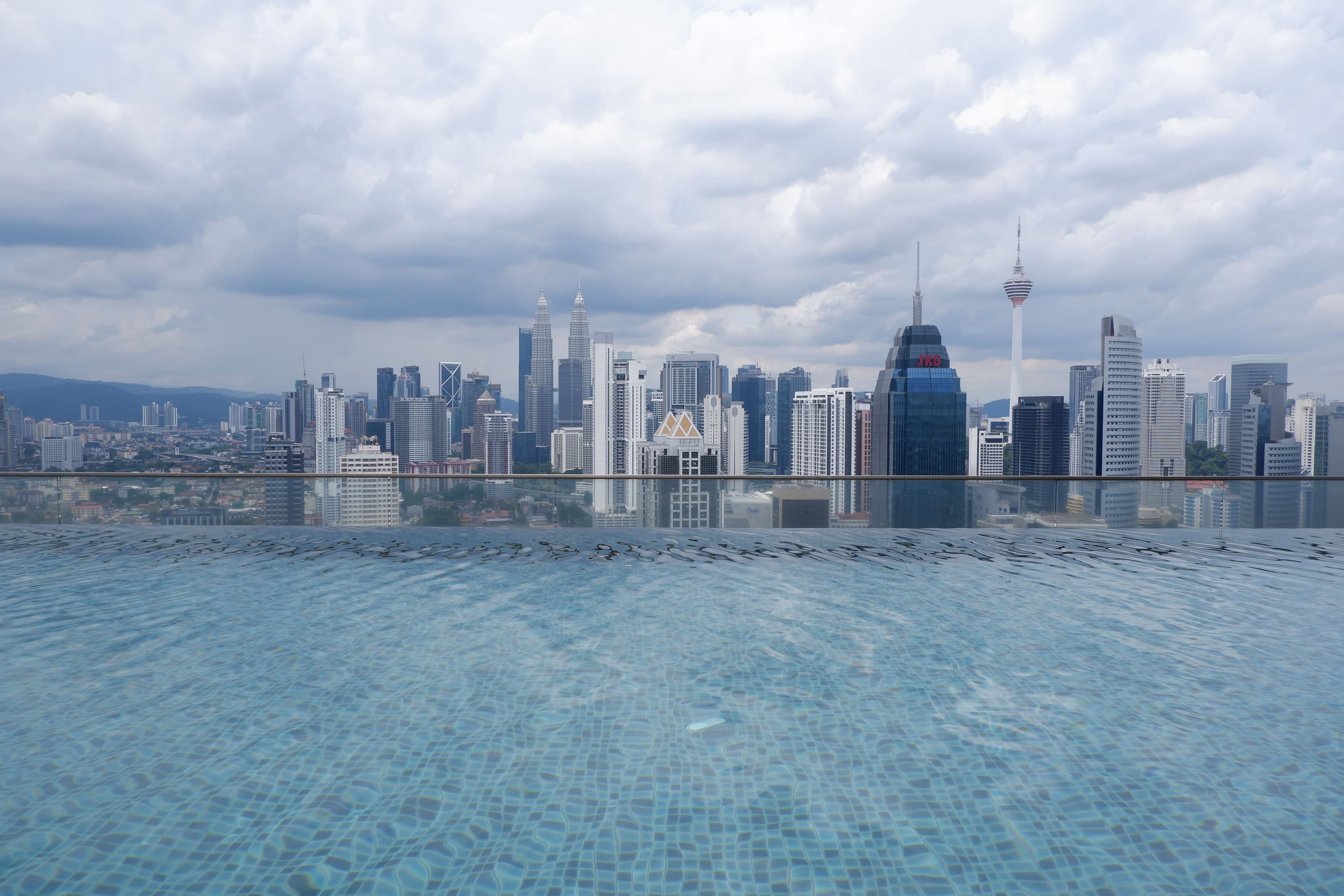
Kuala Lumpur Malaysia Travel Guide
Kuala Lumpur surprised us in the best way. We came for the Petronas Twin Towers and stayed for the food streets, rainbow-stepped caves, and some of the cheapest world-class sightseeing anywhere. Most of KL's icons are free or under RM 100, and the train network gets you everywhere for pocket change. This guide shares exactly what we did, what everything cost, and what we'd do differently.
Quick Facts
Country
Malaysia
Region
Southeast Asia
Language
Malay (English widely spoken)
Currency
Malaysian ringgit (MYR), 1 USD is about RM 4.40
Best Time to Visit
May to July and December to February (drier months)
Visa (MY/PH)
Visa-free for many nationalities ~ check current rules
Getting Around
LRT/MRT trains under RM 5 a ride, Grab for everything else
Daily Budget
Budget
$25-35
Mid
$60-100
Luxury
$180+
Top things to do in Kuala Lumpur
Start with the Petronas Twin Towers. The observation deck costs RM 98 for international adults, about $22, and it's the single biggest ticket in the city, so book online days ahead for the sunset slot because tickets genuinely sell out. If you'd rather keep that money for food, seeing the towers from KLCC Park is completely free, and the evening fountain show in front of the mall costs nothing either. We did both, and honestly the free park view at night was the more memorable photo.
Batu Caves is the classic half-day trip and it's free. The KTM Komuter train from KL Sentral costs about RM 3 each way and drops you at the base of the 272 rainbow-painted steps. Go early in the morning to beat the heat and the crowds, dress modestly for the temple cave, and guard your snacks from the macaques, they are professional thieves. Budget 2-3 hours including the train ride.
For a second skyline fix, locals argue KL Tower beats Petronas, because from up there your photos actually include the Petronas Towers. The observation deck runs RM 49-60 and the open-air Sky Deck with its glass box is RM 105-110, roughly $11-25 depending on your pick. Round out your list with the free Thean Hou Temple, six tiers of red lanterns with a skyline backdrop, and Merdeka Square, where Malaysia declared independence in 1957 and the Sultan Abdul Samad Building lights up beautifully at dusk.
Food in KL: Jalan Alor, hawker stalls, and what to order
Jalan Alor in Bukit Bintang is the famous evening food street, and it lives up to the hype. Expect charcoal-grilled chicken wings, satay skewers, char kway teow, and Hokkien mee, with most plates costing RM 8-20, so around $2-5. Two people can eat extremely well for under $15 total. It gets busy after 7 pm, which is exactly when you want to be there, when the woks are flaming and every plastic table is full.
Beyond Jalan Alor, hunt down nasi lemak for breakfast, coconut rice with sambal, anchovies, and egg, often RM 3-8 at a street stall, and a proper bowl of curry laksa in Chinatown for RM 10-15. Brickfields, KL's Little India near KL Sentral, does banana leaf rice lunches for RM 10-18 where they keep refilling your rice and vegetables. Wash everything down with teh tarik, Malaysia's pulled milk tea, for a couple of ringgit. Food is where KL absolutely spoils you.
A half day in the historic core: Merdeka Square to Chinatown
We spent one of our favorite half days walking the old colonial heart of the city. Start at Merdeka Square, which is free, and pop into the KL City Gallery for about RM 10 to see the miniature city model. From there, the River of Life boardwalk follows the confluence where the Klang and Gombak rivers meet at Masjid Jamek, one of KL's oldest mosques. Come back at dusk when the riverbanks glow blue and the Sultan Abdul Samad Building is floodlit, it's one of the best free evening scenes in the city.
Ten minutes on foot brings you to Chinatown around Petaling Street, all covered market stalls, wet markets, and heritage temples. Central Market nearby is the air-conditioned option for souvenirs at fixed prices. When the midday heat gets brutal, do what we did and retreat to the Islamic Arts Museum Malaysia near the National Mosque. Entry is RM 20, about $4.50, it holds Southeast Asia's largest Islamic art collection, and the air conditioning alone is worth the ticket.
Getting around KL and where to stay
KL's rail network is cheap and genuinely useful. The LRT, MRT, and Monorail lines cover almost every sight in this guide, with most rides costing under RM 5. Get a Touch 'n Go card or use contactless payment to skip the token queues. From the airport, the KLIA Ekspres train reaches KL Sentral in about 30 minutes. For anywhere the trains don't go, like Thean Hou Temple, Grab rides are plentiful, most cross-town trips cost RM 10-25, far cheaper than metered taxis and with no haggling.
For a base, we recommend either KL Sentral or Bukit Bintang. KL Sentral is the transport hub, ideal if you're doing day trips, with solid mid-range hotels from around $35-60 a night. Bukit Bintang puts you within walking distance of Jalan Alor, the malls, and the nightlife, with everything from $15 hostel beds to five-star rooms under $150. Both connect directly to the rail lines, so you can't really go wrong with either.
Best time to visit Kuala Lumpur and practical tips
KL is hot and humid all year, hovering around 32°C by day, so there's no bad season, just wetter and drier ones. May to July and December to February tend to be the more comfortable windows, while March to April and September to November bring heavier afternoon downpours. The rhythm that worked for us: sightsee outdoors in the morning, schedule a museum or mall for the mid-afternoon storm window, then head back out for the evening.
A few practical notes. Dress modestly for mosques and temples, robes are usually lent free where required. Carry small notes for street food and market stalls, and drink bottled water, which costs under RM 2. English is widely spoken, local sim cards and eSIMs are cheap, and KL is generally a safe, easy city, just keep your phone secure in crowded markets like Petaling Street, the same as anywhere else.
How much does Kuala Lumpur cost per day?
KL is one of the cheapest world-class cities we've sightseen in. All the major paid entries combined, the Petronas observation deck, KL Tower, and the Islamic Arts Museum, come to roughly $30-55, and that's with Batu Caves, Thean Hou Temple, and Merdeka Square thrown in free. Street food meals run $2-5, train rides under $1.50, and a Grab across town rarely tops $6.
As a daily budget, backpackers can travel comfortably on $25-35 a day with hostel dorms and hawker food. A mid-range trip with a nice hotel, restaurant meals, and the paid attractions lands around $60-100 a day. Even luxury is a bargain here, with five-star hotels from $120-180 a night that would cost triple in Singapore. Three full days covers the highlights; four lets you add a slower day trip without rushing.
See it on the Map
View Kuala Lumpur alongside all my other footprints.
Budgeting for Malaysia
Wondering how much Malaysia costs? See our real budget breakdown with daily costs at budget, mid-range, and luxury levels.