Phuket Thailand Travel Guide
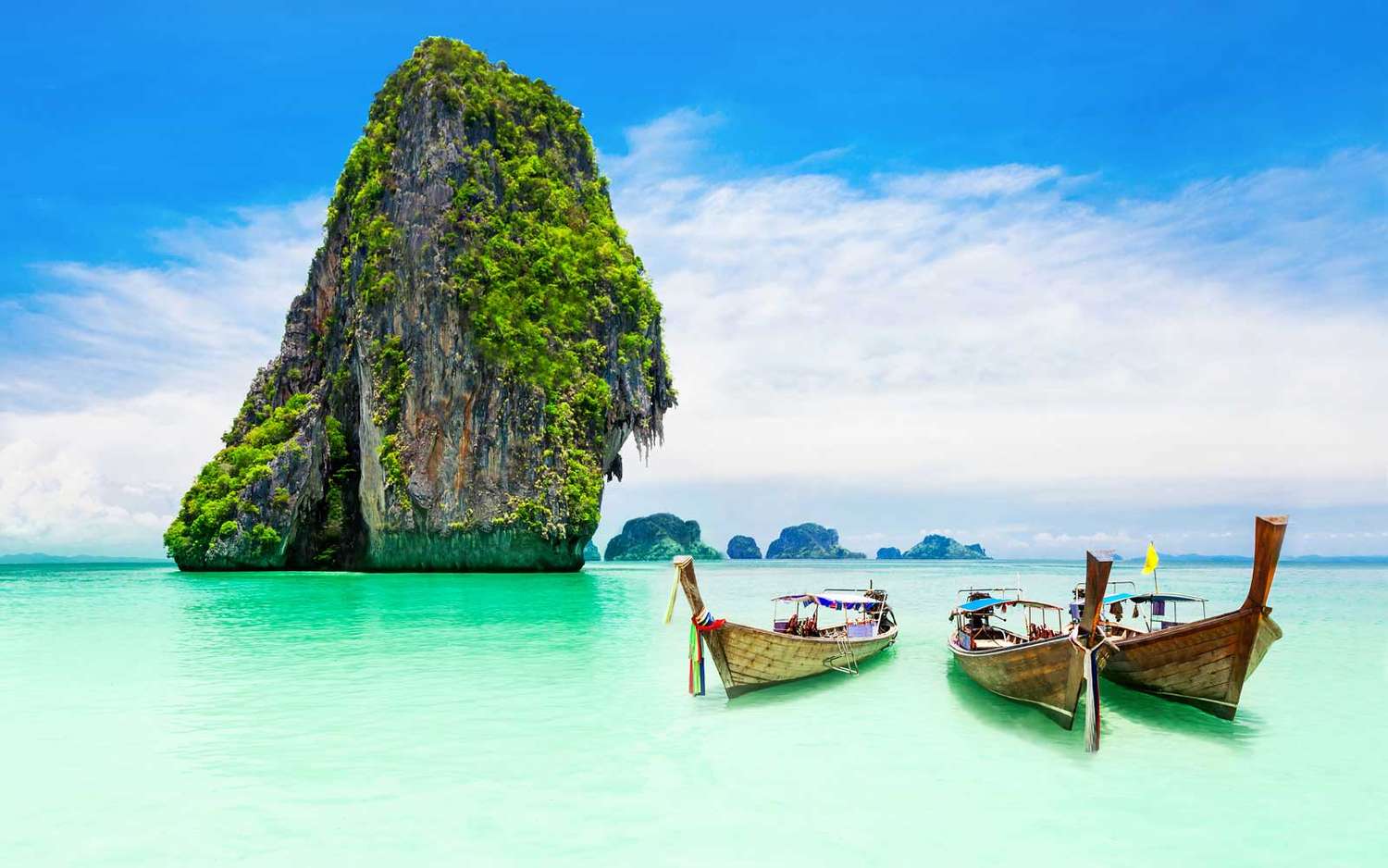
Phuket won us over faster than we expected. Thailand's largest island mixes proper white-sand beaches with a pastel Sino-Portuguese old town, hilltop temples, and some of the most beautiful boat trips in Asia. Here's the thing we learned quickly: the temples and beaches are free, what you pay for is the water. The island-hopping tours to Phi Phi and Phang Nga are the big-ticket items, and on a calm day they're worth every baht.
Quick Facts
Country
Thailand
Region
Andaman Sea, southern Thailand
Language
Thai (English widely spoken in tourist areas)
Currency
Thai baht (THB), 1 USD is about 36 baht
Best Time to Visit
November to April (dry season, calm seas)
Visa (MY/PH)
Visa-free for many nationalities ~ check current rules
Getting Around
Grab rides, songthaew buses 30-50 baht, scooter rental with license
Daily Budget
Budget
$30-45
Mid
$70-130
Luxury
$250+
Top things to do in Phuket
Start with the free icons. The Big Buddha, a 45-metre marble statue on a hilltop, costs nothing beyond a donation and delivers 360-degree views over the whole island, go at sunset for the best light over the west coast, and dress modestly, sarongs are lent at the entrance. Just down the same road, Wat Chalong is Phuket's largest and most revered temple, also free, with a glittering pagoda said to hold a relic of the Buddha. The two combine easily into one half-day by scooter or Grab.
The beaches are the other free headline. Patong is the liveliest strip, with the sand itself free and a sun lounger plus umbrella running 100-200 baht for the day. If Patong's energy is too much, Kata and Karon are a short ride south, quieter, cleaner, and better for actual swimming. We ended up basing beach days at Kata and dipping into Patong only for the nightlife, which felt like the best of both worlds.
Then come the boat tours, Phuket's real showstoppers. A full-day speedboat trip to the Phi Phi Islands and Maya Bay, the turquoise cove from the movie The Beach, costs 1,500-2,500 baht plus a 400 baht national park fee, roughly $50-80 all-in. Phang Nga Bay, with its limestone karsts, sea caves you canoe through, and the famous James Bond islet, runs 1,000-1,800 baht plus park fee, about $35-60. Book small-group boats and go early.
Food in Phuket: markets, seafood, and southern Thai flavors
Southern Thai food is spicier and punchier than Bangkok's, and Phuket is its showcase. Local markets and food courts serve Hokkien-style noodles, massaman and southern yellow crab curry, and moo hong, Phuket's peppery braised pork belly, for 60-150 baht a plate. Fresh seafood is everywhere: grilled prawns, whole steamed fish, and crab fried rice at beachside shacks typically run 150-400 baht per dish, a fraction of resort restaurant prices for the same catch.
The single best food event is the Sunday Walking Street market on Thalang Road in Old Phuket Town, when the whole street closes for food stalls, live music, and local snacks, most items 20-100 baht. Any evening, the night markets around Phuket Town serve the cheapest and most local dinners on the island. As a rule, we ate brilliantly for 300-500 baht a day per person at markets, while a beachfront seafood dinner for two at Patong ran about 800-1,500 baht.
Old Phuket Town: the island's unexpected highlight
We almost skipped Old Phuket Town, and that would have been a mistake. The historic core is a grid of pastel Sino-Portuguese shophouses built on tin-mining money a century ago, now filled with cafes, galleries, street art, and photogenic corners on every block, and it's completely free to wander. Thalang Road, Soi Romanee, and Dibuk Road are the classic streets. Give it 2-3 hours in the late afternoon when the light goes golden and the heat backs off.
The Old Town also fixes Phuket's rainy-day problem: when a storm rolls in off the Andaman, this is where you want to be, museum-hopping and cafe-sitting instead of sulking at a wet beach. It's also the island's best-value base, guesthouses in restored shophouses cost far less than beachfront resorts, and if your trip leans more culture-and-food than sunbathing, staying here and day-tripping to the beaches works surprisingly well.
Getting around Phuket and where to stay
Phuket is big, about 50 km top to bottom, and public transport is thin, so plan your logistics. Blue songthaew buses trundle between Phuket Town and the main beaches for 30-50 baht but stop around dusk. Grab works island-wide and beats the notoriously pricey local taxi cartels; expect 300-500 baht between beach towns. Many travelers rent scooters for around 250-350 baht a day, only do this with a proper license and a helmet, Phuket's roads are unforgiving.
Where you stay shapes your whole trip. Patong is for nightlife, with everything from $15 guesthouses to big resorts. Kata and Karon suit families and swimmers, mid-range hotels run $40-90 a night. Old Phuket Town is the budget and culture pick, with characterful guesthouses from $20-40. One key tip: island tours leave from the piers on the east and south coasts, and every operator does hotel pickup, so pick your base for the beach life you want, not the boats.
Best time to visit Phuket and practical tips
The dry season from November to April is Phuket at its best: calm turquoise water, reliable sun, and safe swimming, with December to February the absolute peak for both weather and prices. May to October is the southwest monsoon, bringing rough seas, red-flag swimming days, and cancelled boat trips, but also half-price hotels and empty beaches between the showers. If your trip is built around Phi Phi and Phang Nga, come in the dry months.
Practical notes from our trip: book island tours a day or two ahead through your hotel or a reputable online platform, and check whether the 400 baht park fee is included in the quoted price. Maya Bay caps daily visitor numbers and closes seasonally to let the reef recover, so confirm it's open before booking a tour around it. Respect red flags in monsoon surf, they're not suggestions. And carry cash for markets, songthaews, and beach vendors.
How much does Phuket cost per day?
Phuket's costs split cleanly in two. The land-based island is nearly free: Big Buddha, Wat Chalong, Old Town, and every beach cost nothing, with only loungers, snacks, and rides to pay for. The water is the splurge: a Phi Phi tour at $50-80 and a Phang Nga tour at $35-60 together put our sightseeing total at $70-110. Skip the boats and Phuket costs almost nothing to see.
For daily budgets, backpackers can manage on $30-45 a day with guesthouses, market food, and songthaews, saving up for one boat tour. Mid-range travelers should plan $70-130 a day for a good hotel near the beach, restaurant seafood, Grab rides, and tours. Luxury resorts, private longtails, and beach clubs push past $250 a day. Five days is a comfortable stay: two beach days, two boat days, and one for the Big Buddha and Old Town.
See it on the Map
View Phuket alongside all my other footprints.
Budgeting for Thailand
Wondering how much Thailand costs? See our real budget breakdown with daily costs at budget, mid-range, and luxury levels.