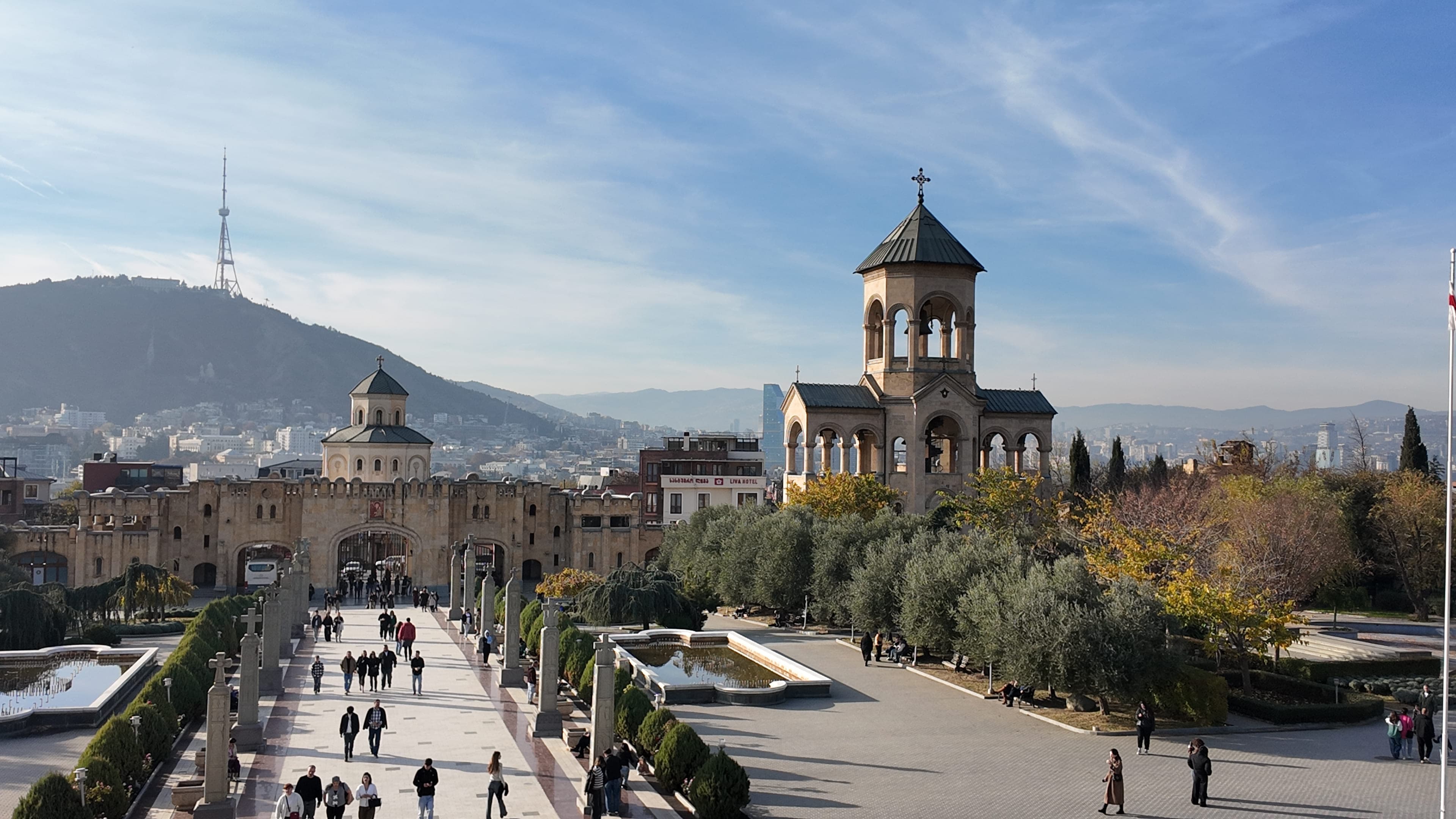
Tbilisi Georgia Travel Guide
We planned three days in Tbilisi and could easily have stayed three weeks. Georgia's capital tumbles down both banks of the Mtkvari River in a jumble of carved wooden balconies, brick-domed bathhouses, and hilltop fortress walls, with some of the best food and wine we've had anywhere. It's also one of the cheapest capitals you'll ever sightsee in ~ the fortress, cathedral, and old town cost nothing. Here's how we spent our time and our lari.
Quick Facts
Country
Georgia
Region
Caucasus
Language
Georgian (English common in tourism; Russian widely understood)
Currency
Georgian lari (GEL), 1 USD ≈ ₾2.70
Best Time to Visit
April-June and September-October (grape harvest)
Visa (MY/PH)
Visa-free up to 1 year for many nationalities ~ check current rules
Getting Around
Metro and buses at ₾1 per ride with a Metromoney card, Bolt taxis $2-4, very walkable center
Daily Budget
Budget
$30-45
Mid
$70-120
Luxury
$200+
Top things to do in Tbilisi
Start where we did: ride the cable car up from Rike Park to Narikala Fortress, paying just ₾2.5-5 per ride, about $1-2, with a metro card. The 4th-century walls are free to wander, and you can walk down past the Mother of Georgia statue into the old town. Cross the Bridge of Peace on the way, the glass-and-steel wave over the river; come back after dark when its 30,000 LEDs ripple, linking Rike Park to the old town in one photogenic stroll.
The Old Town itself is the main event and costs nothing. Gabriadze's leaning clock tower puts on a tiny angel show at noon and 7 pm, with puppet theatre tickets at ₾10-30 if you want the full show, and the carved wooden balconies of Sololaki are worth a slow wander before they're all renovated. Holy Trinity Cathedral (Sameba), one of the tallest Orthodox cathedrals in the world, is free too, and sunset light on the gold facade is spectacular from the Avlabari side.
For the classic panorama, take the 1905 funicular up to Mtatsminda Park for ₾10-15 round trip, about $4-6. The hilltop amusement park has the best city view in Tbilisi, and the legendary warm ponchiki custard doughnuts at the top are a rite of passage. Between the cable car, funicular, and everything free, our entire sightseeing bill stayed under $15 before the baths.
The Abanotubani sulfur baths
Tbilisi literally means 'warm place', and the brick-domed baths of Abanotubani are where the city got its name. This is the one sight worth a splurge: public bath entry costs just ₾10-30, about $4-12, while a private room runs ₾100-200 per hour, roughly $37-75, split between however many of you share it. We booked a private room at the ornate Chreli-Abano bathhouse and added the kisa scrub, and emerged an hour later feeling completely reborn.
A few tips from our visit: book private rooms a day ahead in high season, bring swimwear for mixed groups or go traditional in single-sex public halls, and don't eat a huge meal right before ~ the water is genuinely hot. The kisa mitt scrub plus foam massage costs extra but is the highlight; a scrubbing removes what feels like a full layer of travel. Budget 1-2 hours, then reward yourself with khinkali nearby.
Food and wine in Tbilisi
Georgian food alone justifies the flight. Khinkali, the pleated soup dumplings, cost about ₾1.5-2.5 each, so a filling plate of ten runs $6-9; hold the topknot, sip the broth, and leave the doughy handles on your plate like a local. Adjarian khachapuri, the boat-shaped bread with molten cheese, butter, and egg yolk, costs ₾15-25, roughly $6-9, and one comfortably feeds two. Add a pkhali platter and tomato-cucumber salad and dinner for two lands around $20-30 with wine.
That wine matters: Georgia has an 8,000-year winemaking tradition, the oldest on earth, and qvevri amber wines are poured everywhere in the center. A glass in a wine bar costs ₾8-15, about $3-6, and house wine by the carafe in old-town restaurants is even cheaper. For eating, we split time between old-school taverns in Sololaki and the food halls near Fabrika; both ends of the spectrum stayed comfortably cheap by any Western standard.
Getting around Tbilisi and where to stay
Stay in the Old Town near Freedom Square ~ almost everything is a walk or one short ride away, and day trips to the wine country and mountains depart from the city. Hostel beds run $8-15, charming guesthouses and mid-range hotels $40-80 per night, and design hotels like Stamba sit at $200+. We loved being able to stumble ten minutes home from a wine bar through lamplit Sololaki lanes every night.
Transport is nearly free by Western standards. A single metro or bus ride costs ₾1 with the tap-to-pay Metromoney card, and the same card pays for the Narikala cable car at ₾2.5-5 per ride. Bolt is the taxi app of choice, with most cross-town rides at $2-4. The airport sits 17 km out; bus 337 runs around the clock for pocket change, while a Bolt costs about $10-15. Between the metro and our feet, we barely spent $5 on transport all trip.
Best time to visit Tbilisi and practical tips
Spring and autumn are the winners: April to June brings mild days and blooming courtyards, while September and October pair warm weather with the rtveli grape harvest, when the wine regions an hour away are at their liveliest. July and August can be sticky in the valley at 35°C, though evenings stay lively. Winter is quiet and cheap, and the sulfur baths honestly make more sense in the cold anyway.
Georgia's visa policy is famously generous: citizens of many countries can stay visa-free for up to a full year, though you should check current rules for your passport. Cards are widely accepted, but keep some lari cash for markets and marshrutkas. English is common with younger Georgians and in tourism, Russian with older generations. One cultural note: if you're invited to a supra feast, pace yourself ~ the toasts are many and the wine keeps coming.
How much does a trip to Tbilisi cost?
Tbilisi is astonishing value. Our full sightseeing spend was $15-40 per person, and the only reason to hit the top of that range is a private sulfur-bath room: the cable car is $1-2, the funicular $4-6, public baths $4-12, and the fortress, cathedral, Bridge of Peace, and old town are all free. Meals added $5-10 per person at casual spots and $10-15 at the best traditional restaurants, wine included.
Daily budgets that matched what we saw: $30-45 for backpackers using hostels, bakeries, and public baths; $70-120 for a guesthouse or boutique hotel, restaurant meals with wine, a private bath session, and a day trip to Mtskheta or the Kakheti wine region at $25-50 per person; $200+ for design hotels and private guides. Three or four days in the city plus one day trip is the ideal first visit, so a four-day mid-range trip runs about $300-500 per person before flights.
See it on the Map
View Tbilisi alongside all my other footprints.
Budgeting for Georgia
Wondering how much Georgia costs? See our real budget breakdown with daily costs at budget, mid-range, and luxury levels.