Brussels Belgium Travel Guide
We stepped out of a narrow lane onto the Grand Place at dusk, just as the floodlights hit the gilded guildhalls, and understood immediately why people call it Europe's most beautiful square. Brussels rewarded us far beyond its bureaucratic reputation, with Art Nouveau facades, comic murals around random corners, and a food scene built on waffles, frites, chocolate, and world-class beer. Best of all, almost every headline sight here is free, so our money went to pralines instead of tickets. This guide gathers everything we learned wandering the Belgian capital.
Quick Facts
Country
Belgium
Region
Brussels-Capital Region
Language
French and Dutch (English widely spoken)
Currency
Euro (EUR)
Best Time to Visit
April to June and September to October; December for Christmas markets
Visa (MY/PH)
Schengen area; many nationalities visa-free up to 90 days
Getting Around
Walk the historic core; STIB metro and trams (~€2.60 single) for the Atomium and Cinquantenaire
Daily Budget
Budget
$70-100
Mid
$150-220
Luxury
$350+
Top things to do in Brussels
Start at the Grand Place, the ornate main square ringed by gilded guildhalls and the Gothic town hall. It costs nothing, and we recommend visiting twice: once by day for the detail and once at night when the facades are floodlit. If you can time a trip for mid-August in an even-numbered year, the biennial flower carpet covers the cobbles with hundreds of thousands of begonias. Five minutes away stands Manneken Pis, the famously tiny peeing-boy statue, also free and dressed in a different costume most days.
The one real ticket in town is the Atomium, the 102-meter model of an iron crystal built for the 1958 World's Fair. Entry costs €16 (about $17) and gets you inside the spheres with escalator rides between them and a panoramic city view up top; the gleaming exterior is free to admire from the park below. Allow 1.5-2 hours plus the metro ride out to Heysel.
Round out the list with the free stuff that makes Brussels special. The Galeries Royales Saint-Hubert, one of Europe's oldest glass-roofed shopping arcades (1847), is lined with chocolatiers and free to stroll. The Royal Palace opens its doors free of charge from late July to early September, when you can see the Mirror Room ceiling tiled with 1.4 million jewel beetle wing-cases. Cinquantenaire Park and its grand triumphal arch are free too, a short metro ride from the center.
Food in Brussels: waffles, frites, and beer
Brussels is a city best consumed on foot and by waffle. Know the difference before ordering: the Brussels waffle is light, rectangular, and crisp, while the Liège waffle is dense, caramelized, and sweet. Street stands sell plain ones for €2-4, with toppings pushing it to €5-8, and honestly the plain sugar-pearled Liège version needs nothing added. For frites, join the queue at a proper friterie where a cone with sauce runs €4-6, double-fried the Belgian way and eaten standing up.
For sit-down meals, moules-frites (a pot of mussels with fries) is the national classic at €22-28 in the restaurants off the Grand Place, though we found better value a few streets away around Place Sainte-Catherine, the old fish-market quarter. Carbonnade flamande, beef slow-braised in dark beer, costs €16-20 and suits colder evenings perfectly. A daily lunch menu at neighborhood brasseries runs €14-18 including a starter, which became our standard midday move.
Beer and chocolate deserve their own budget line. Traditional brown cafes pour hundreds of Belgian beers, from €4-5 for abbey ales to €5-7 for lambics and Trappists, each served in its own glass. In the Galeries Royales Saint-Hubert you can taste-test pralines at historic houses like Neuhaus and Mary, where individual chocolates cost €1-2 and a small mixed box €10-15. Supermarket chocolate from Côte d'Or makes an excellent cheap souvenir at €2-4 a bar.
Day trips: Bruges, Ghent, and beyond
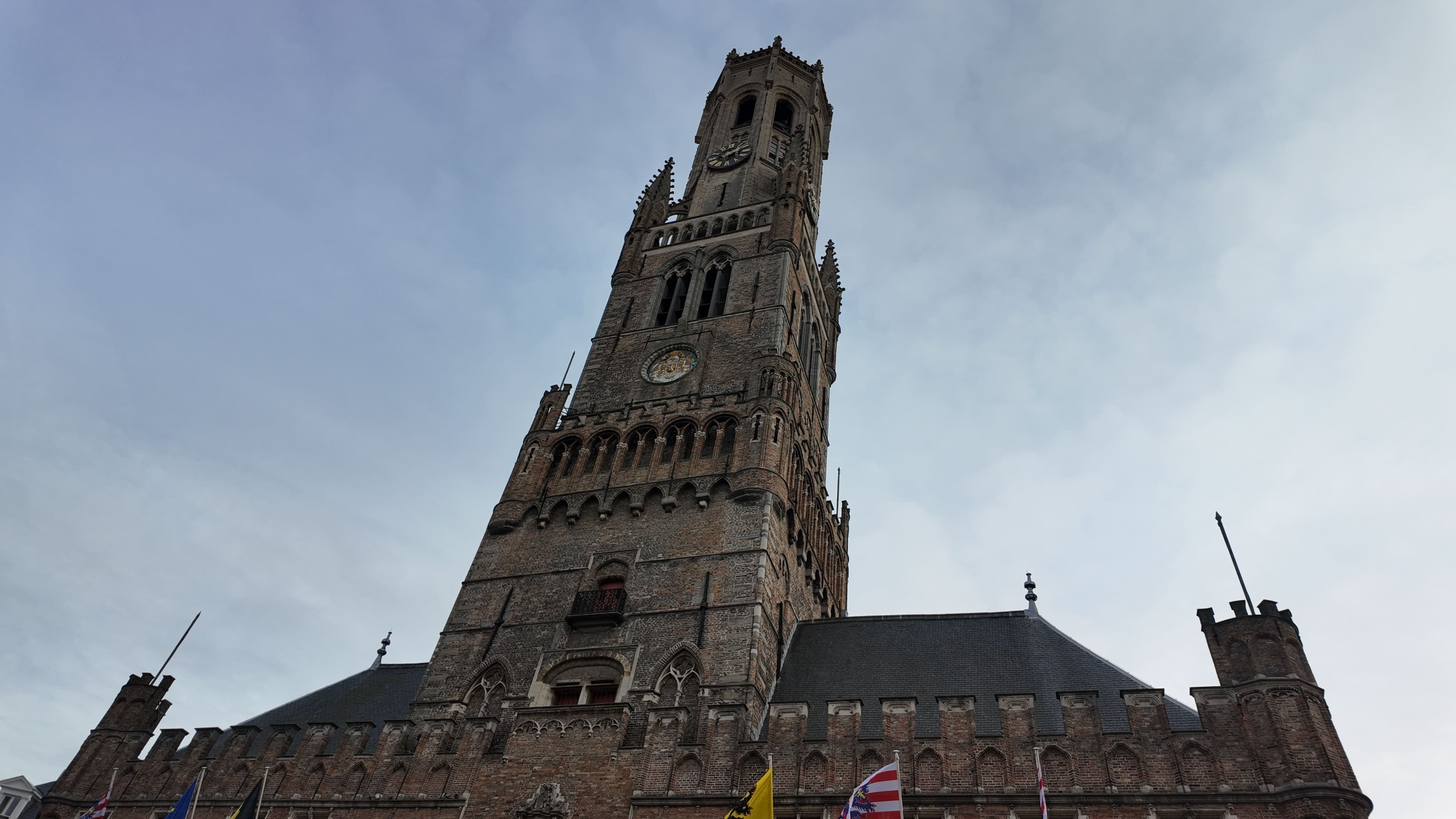
Belgium is tiny and its rail network is dense, which makes Brussels a superb day-trip base. Bruges is the classic excursion: about one hour each way by train, with medieval canals, the Belfry, and the Markt square forming an almost implausibly pretty ensemble. Weekend return fares are discounted, and standard returns cost roughly €16-30 depending on ticket type. Go early, because by 11 a.m. the center fills with tour groups; we had the canals nearly to ourselves at 9.
Ghent is the connoisseur's alternative, just over 30 minutes away and half as crowded. It pairs a brooding medieval castle and canal-side merchant houses with a genuinely lived-in student energy, and the Van Eyck altarpiece in Saint Bavo's Cathedral is one of Europe's great artworks. If you have only one spare day, we would honestly pick Ghent for atmosphere and Bruges for postcard perfection; with two days, do both, since trains run several times an hour.
Closer to the city, Heysel makes a half-day combined outing: the Atomium (€16), the free-to-view Mini-Europe park entrance area beside it, and the surrounding parkland. Antwerp, 45 minutes north, adds Rubens, a spectacular railway cathedral of a station, and Belgium's best fashion shopping if your trip leans urban rather than medieval.
Getting around Brussels and where to stay
Trains link Brussels Airport (Zaventem) to the three central stations in about 20 minutes, so skip the taxis. Once in the center, the historic core is compact and walkable; we covered the Grand Place, Manneken Pis, the arcades, and Sainte-Catherine entirely on foot. For longer hops, the STIB metro, trams, and buses use a single ticket system, with singles around €2.60 and a 24-hour pass about €8, which pays off if you visit the Atomium and Cinquantenaire in one day.
Stay within a 10-minute walk of the Grand Place if you can. The blocks between the square, the Bourse, and Sainte-Catherine put every evening stroll on your doorstep, with mid-range hotels at €90-150 per night and hostels from €30-45 per bed. The Sablon area is quieter and more elegant, handy for the antiques market and chocolate shops. Around the Gare du Midi prices drop, but the trade-off in evening atmosphere is real, so we would pay the small premium for the center.
Two practical notes: Brussels is officially bilingual, so street signs appear in both French and Dutch, which can make the same square look like two different places on a map. And pickpocketing around the Grand Place and on airport trains is the city's main crime issue, so keep bags zipped in crowds; beyond that we found the tourist core relaxed and safe.
Best time to visit Brussels and practical tips
April to June and September to October are the sweet spots, with mild walking weather, terrace season in full swing, and manageable crowds. High summer works well too, especially since the Royal Palace only opens (free) from late July to early September, and mid-August in even years brings the Grand Place flower carpet. December has its own case: the Winter Wonders market strings lights and mulled-wine stalls from the Bourse to Sainte-Catherine, though days are short and drizzly.
Pack for rain in any season, because Brussels weather changes hourly, and the glass-roofed Galeries Royales Saint-Hubert make the perfect free shelter when it starts. Museums typically close on Mondays, so plan the Atomium or day trips then. Card payments are universal, tipping is not expected beyond rounding up, and tap water is safe although restaurants habitually push bottled. Check the Manneken Pis costume schedule online for a reliable laugh; the statue is much smaller than everyone expects.
How much does a Brussels trip cost?
Sightseeing in Brussels is remarkably cheap: budget just $25-40 per person for attractions across a whole visit, because the Atomium at €16 (about $17) is the main paid sight and the Grand Place, Manneken Pis, arcades, Cinquantenaire, and summer Royal Palace all cost nothing. Your real spending goes to food and drink, which is exactly how Brussels should be experienced. A waffle habit at €2-4 a time is a budget line we fully endorse.
Realistic daily totals: budget travelers manage $70-100 per day with hostel beds, friterie and waffle-stand meals, and free sights. Mid-range visitors staying near the Grand Place with one brasserie meal daily, a beer cafe evening, and transit passes should plan $150-220 per day. Luxury stays with fine dining push past $350. Add roughly €16-30 for a Bruges or Ghent day-trip train fare. Two to three days covers Brussels thoroughly, and four lets you fold in two day trips without rushing.
See it on the Map
View Brussels alongside all my other footprints.
More from Europe
Budgeting for Belgium
Wondering how much Belgium costs? See our real budget breakdown with daily costs at budget, mid-range, and luxury levels.