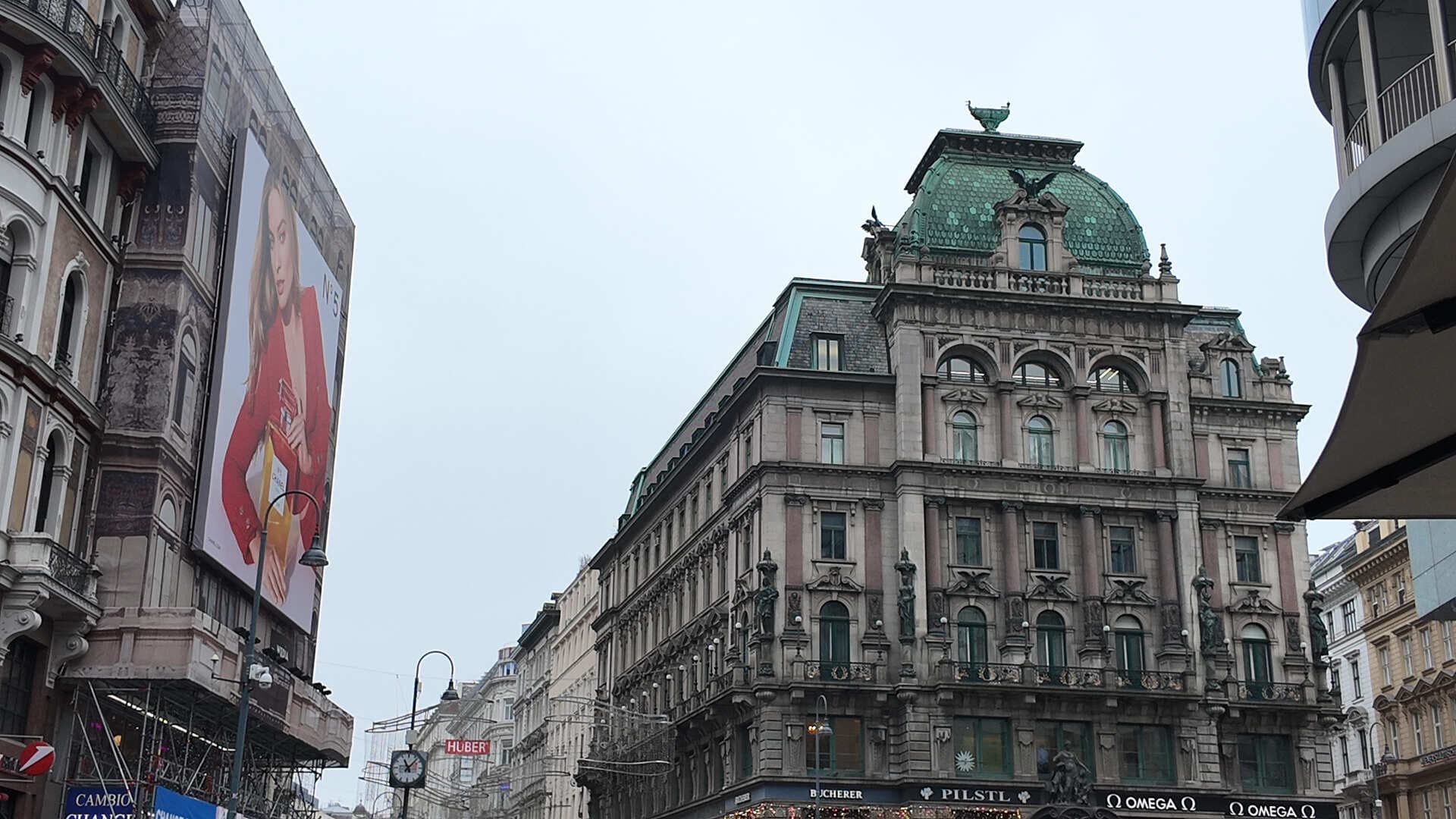
Vienna Austria Travel Guide
We came to Vienna for the palaces and stayed for the coffee houses, where a single melange buys you a marble table, the day's newspapers, and permission to sit for hours. This is a city that runs on imperial grandeur and quiet ritual in equal measure, from Klimt's golden Kiss at the Belvedere to standing-room opera tickets cheaper than a cocktail. Here is everything we learned about tickets, Sachertorte, neighborhoods, and what Vienna really costs.
Quick Facts
Country
Austria
Region
Vienna (Central Europe, on the Danube)
Language
German (English widely spoken)
Currency
Euro (EUR)
Best Time to Visit
April-June, September-October, and December for markets
Visa (MY/PH)
Schengen rules apply ~ check current requirements
Getting Around
U-Bahn and trams (€2.40 single, €8 for 24 hours)
Daily Budget
Budget
$80-110
Mid
$160-240
Luxury
$400+
Top things to do in Vienna
Schönbrunn Palace, the Habsburgs' 1,441-room summer residence, deserves half a day. Interior tickets run €28 for the imperial apartments or €38 for the full palace circuit, but here is the trick we loved: the vast gardens, the climb to the Gloriette, and the hedge maze area's surroundings are free. Go early, wander the grounds first, and only pay for the state rooms if interiors are your thing. The Hofburg in the center, the winter palace, charges €19 for the Sisi Museum, Imperial Apartments, and Silver Collection.
The Belvedere's Upper Palace (€17-19) holds Klimt's 'The Kiss', the painting most visitors cross the city for, plus Schiele and a baroque palace that is half the pleasure; its terraced gardens are free to walk. St. Stephen's Cathedral anchors the old town, and its Gothic nave costs nothing to enter, while €6-7 buys either the 343-step south tower climb, with a close-up of the famous zigzag tiled roof, or the catacombs tour.
Vienna's cheapest world-class experience is the State Opera: standing-room tickets sell on the day for €13-18, or take the €13 guided backstage tour when no show fits your schedule. Finish at the Prater, where the park itself is free and the 1897 Riesenrad Ferris wheel, star of 'The Third Man', costs €14 for the slow rotation over the city.
Food in Vienna: schnitzel, Sachertorte, and coffee houses
Wiener schnitzel is the mandatory first dinner, and a proper plate-overhanging veal version at a classic beisl (Viennese tavern) costs €18-26, with pork versions at €12-16. Round out the canon with tafelspitz (boiled beef, Emperor Franz Joseph's favorite, €20-25), goulash at €12-15, and apfelstrudel for €5-7. For cheap eats, the sausage stands (würstelstände) are a Viennese institution: a käsekrainer with bread and mustard runs €4-6, best eaten at midnight.
The coffee house is Vienna's living room and a UNESCO-listed cultural practice, so budget time, not just money. A melange (the local cappuccino) costs €4-6, comes on a silver tray with water, and buys unlimited sitting time at Café Central, Sperl, or Hawelka. A slice of Sachertorte runs €6-8; the famous original at Hotel Sacher is worth doing once, though we honestly preferred the apfelstrudel at less famous rooms with half the queue.
For market food, the Naschmarkt stretches over a kilometer of stalls and eateries where a mixed lunch costs €10-18; go Saturday morning when the flea market joins it, but eat a few stalls deep where prices drop. In autumn, do as the Viennese do and take the tram out to a heuriger, a wine tavern in the vineyard villages of Grinzing or Nussdorf, where a quarter-liter of young grüner veltliner costs €4-5 and the buffet is priced by weight.
A perfect half-day: the Ringstrasse and the MuseumsQuartier
Vienna's showpiece boulevard, the Ringstrasse, was built in the 1860s where the medieval city walls once stood, and circling it is the best orientation the city offers. You can ride regular trams 1 and 2 around most of the loop on a normal €2.40 ticket, passing the State Opera, Hofburg, Parliament, Rathaus, and Burgtheater in about 30 minutes. We preferred walking sections of it at golden hour, when the neo-Gothic Rathaus and the twin museums glow.
Halfway around sits the MuseumsQuartier, one of the largest cultural complexes in the world, built into the former imperial stables. The Kunsthistorisches Museum across the square (€21) houses the Habsburg art hoard, from Bruegel's peasant scenes to Vermeer, in an interior so opulent the staircase alone justifies the ticket. The MQ courtyards themselves are free, full of students draped over the colored loungers, and the cafes make a good recharge stop.
End in the Hofburg's courtyards, which are free to roam even though the Sisi Museum inside charges €19. Time it right and you can watch the Lipizzaner stallions of the Spanish Riding School during their morning exercise sessions (tickets around €16), a far cheaper window into that world than full performance seats, which start north of €50.
Getting around Vienna and where to stay
Vienna's transit is famously good and honestly priced: a single ticket costs €2.40, a 24-hour pass €8, 48 hours €14.10, and 72 hours €17.10, all covering U-Bahn, trams, and buses. There are no turnstiles, just spot checks with roughly €105 fines, so validate once and ride freely. From the airport, the City Airport Train (CAT) reaches Wien Mitte in 16 minutes for €14.90 one way, while the S7 S-Bahn does the same run in 25 minutes for about €4.30, the deal we chose.
Stay inside or just off the Ringstrasse (Innere Stadt, district 1) to walk to nearly everything, with mid-range doubles at €120-200 per night. For better value, we liked the 7th district (Neubau) around Spittelberg's cobbled lanes, all indie shops and bistros, at €90-150, or Leopoldstadt (2nd district) near the Prater from €80-130. Hostel beds run €25-40. Vienna is compact: from any of these bases, the entire center is reachable in 15 minutes.
Best time to visit Vienna and practical tips
April to June and September to October bring 15-25°C days ideal for garden-heavy sightseeing at Schönbrunn and the Belvedere. December is its own season: Vienna's Christmas markets, especially at the Rathaus and Schönbrunn, run from mid-November and are worth braving the 0-5°C cold, with punch at €4-5 a mug. July and August are warm and busy, though many locals leave and the two big opera houses go dark for summer break.
Practical notes: most museums close one weekday, often Monday, so sequence your itinerary around it. Sunday shopping is essentially nonexistent outside train stations, though museums and cafes stay open. Tap water is Alpine-spring quality, restaurants tip at 5-10% by rounding up, and cash still matters at sausage stands, markets, and some cafes. Book Schönbrunn interiors and any opera or concert seats a few weeks ahead in peak season; standing-room opera is the same-day exception.
How much does a trip to Vienna cost?
The imperial headliners add up to roughly $95-120 per person: Schönbrunn's interiors at €28-38, the Upper Belvedere at €17-19, the Hofburg's Sisi ticket at €19, and the Riesenrad at €14. The counterweight is how much of Vienna is free, including the Schönbrunn gardens, St. Stephen's nave, the Hofburg courtyards, the MQ, and every glorious Ringstrasse facade, so two travelers with different budgets can share this city happily.
Daily budgets: $80-110 covers a hostel or budget hotel, sausage-stand and Naschmarkt meals, a transit pass, and one palace per day. A comfortable mid-range trip runs $160-240 per day with a district 1 or 7 hotel double, beisl dinners, coffee-house stops, and all the major tickets. Luxury, with Sacher-grade hotels and opera boxes, starts around $400. A four-day mid-range trip for two lands near $1,400-2,000 excluding flights.
See it on the Map
View Vienna alongside all my other footprints.
More from Europe
Budgeting for Austria
Wondering how much Austria costs? See our real budget breakdown with daily costs at budget, mid-range, and luxury levels.